$60K Metcalf Prizes open. Brain disorders. The overlooked body
Find out how stem cell research is changing how we understand and treat brain disorders such as multiple sclerosis, stroke, Parkinson’s disease and dementia. Watch a recording of our recent online public forum where experts shared the latest science. Read on for more information
Mammary biologist Dr Felicity Davis won a 2019 Metcalf Prize for Stem Cell Research for her work investigating how breasts change through life. She is now continuing her research in Denmark and working with a local museum on an exhibition, The overlooked body: from placentas to crash test dummies.
Last year, she gave birth to twins. Now her own samples are part of the exhibition and helping her research. More below
We’re looking for the next Metcalf Prize winners – up-and-coming researchers with big ideas.
Two prizes worth $60,000 each will be awarded to one male and one female mid-career stem cell scientist. Applications close on Friday 1 August. Please consider if there’s someone you should nominate. Read on for more details. More below
Last year we awarded prizes to:
- Dr Rhiannon Werder from Murdoch Children’s Research Institute is growing ‘mini lungs in a dish’ that mimic the complexity and function of lungs in living people. This will allow her to investigate respiratory infections more effectively and drive new treatment discoveries.
- Dr William Roman from the Australian Regenerative Medicine Institute, based at Monash University, is growing human muscles on a chip. He’s using them to understand how the skeletal muscle cell, the largest cell in a human body, connects with neurons and tendons to create working muscles.
Our first Executive Officer David Zerman was appointed as a Member of the Order of Australia (AM) in the 2025 King’s Birthday Honours. He was instrumental in establishing the Metcalf Prizes and our conference support grants for young researchers. Congratulations David.
Finally, in our regular round-up of stem cell news, you can read about 2019 Metcalf winner James Hudson’s lab-grown ‘tiny hearts’; an Australian-led breakthrough in stem cell transplant for blood cancers; ‘lighting up’ human brain cells; Parkinson’s, cell therapy and exercise; stem cells that mimic healthy female ovaries; stressed-out gut stem cells; and more.
Kind regards,
Dr Graeme L Blackman AO
Chairman, National Stem Cell Foundation of Australia
In this bulletin:
- WATCH: Experts discuss Parkinson's disease, MS, healthy ageing and more
- How an Australian mammary scientist’s own placentas ended up in a Danish museum
- Do you know a rising star in stem cell research?
- Stem cell news from around the world
WATCH: Experts discuss Parkinson's disease, MS, healthy ageing and more

Hear from researchers who are using stem cells to study and potentially treat brain disorders
Two in five Australians will experience a brain disorder in their lifetime. Unfortunately, we still have much to learn about the brain and what happens as we age.
The good news is that scientists working with stem cells are discovering what is needed to make transplanted stem cells survive better in patients’ brains, how to combine gene and cell therapies to treat brain disorders, how to treat MS so that it becomes a ‘disease without disability’, and what we can do to prevent neurodegeneration as we age.
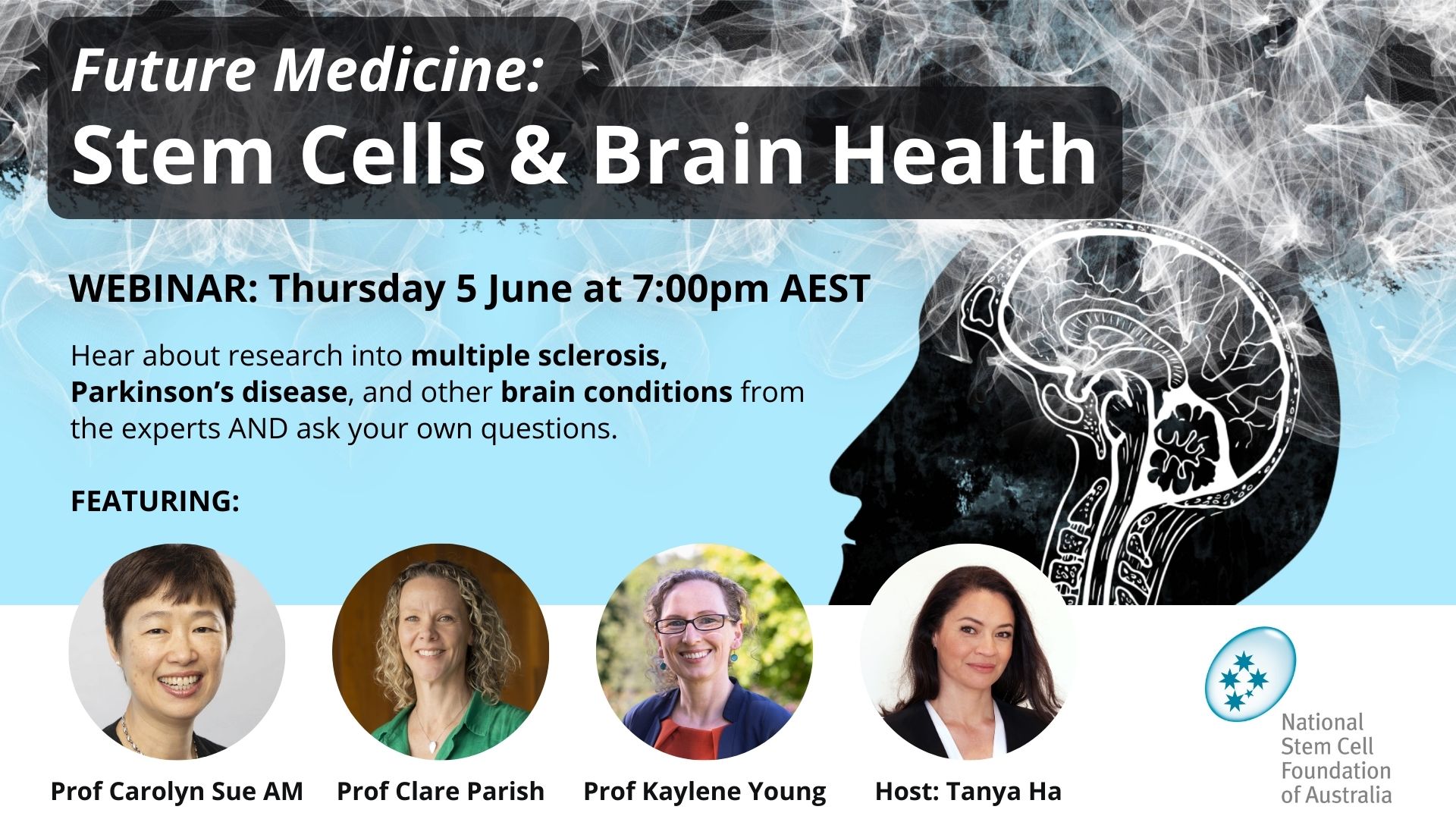
Three of Australia’s top stem cell researchers explored these topics in the public forum Future Medicine: Stem Cells & Brain Health.
You can watch a recording of the event on the Foundation website.
Featuring panellists:
-
Parkinson’s disease and mitochondrial disorders – Professor Carolyn Sue AM, a clinician-scientist at Neuroscience Research Australia in Sydney
-
Parkinson’s disease, and other neurological conditions including stroke, motor neuron disease (MND) and Huntington’s disease – Professor Clare Parish from The Florey in Melbourne
- Multiple sclerosis and other neurological conditions – Professor Kaylene Young from the Menzies Institute in Hobart.
How an Australian mammary scientist’s own placentas ended up in a Danish museum
Metcalf Prize winner wins major funding grants for both research and a public exhibition
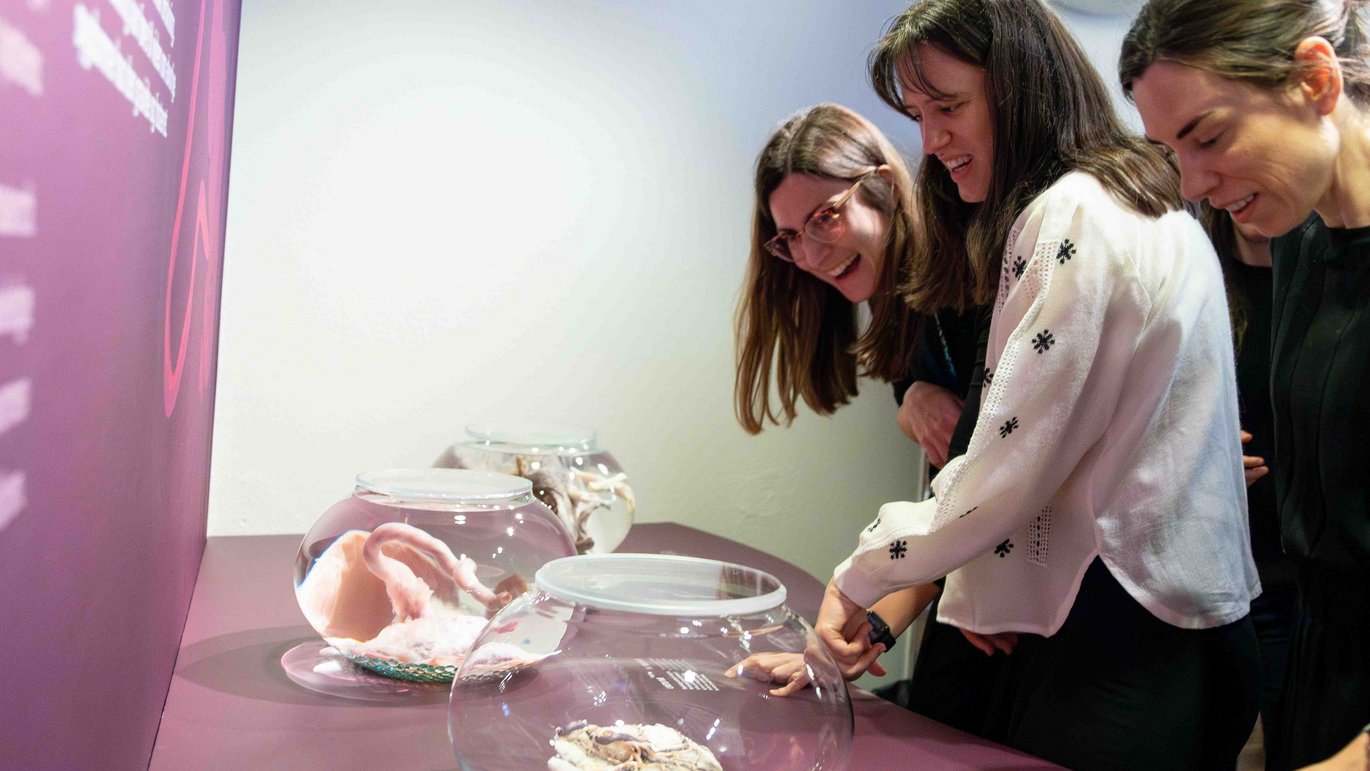 Dr Felicity Davis won a 2019 Metcalf Prize for her research into how stem cells and calcium affect breast function. The following year she won a DKK 25 million (A$5.9 million) grant from Novo Nordisk Foundation to move to Denmark to establish a research laboratory at Aarhus University. Photo provided courtesy Simon Fischel, AU Health.
Today, the Brisbane-born biologist is progressing research that earned her the Metcalf. She holds a joint appointment between UNSW and Aarhus University, where she leads a project entitled ‘Intracellular Calcium Signalling at the Nexus of Mammary Gland Function and Failure’.
In 2023, Felicity received a further DKK 6 million (A$1.5 million) from Novo Nordisk Foundation to help lead the development of a Danish museum exhibition to improve public understanding of women’s health and female biology.
Phase 1 of the new exhibition, The overlooked body, opened in January at the Steno Museum in Aarhus and runs until the end of 2025. From placentas to crash test dummies, it explores how gender disparities in medical research affect us today.
Highlights include a crash test dummy installation; the world’s largest knitted placenta created by Australian artist Rebecca Vandyk-Hamilton; a real placenta; and an endometriosis installation.
Last year, Felicity gave birth to twins of her own.
We caught up with her for a long-distance Q&A.
What first drew you into stem cell research?
I did my PhD in breast cancer research and felt increasingly frustrated about how little we understood about the normal breast. During my second postdoc at the University of Cambridge, I had the opportunity to work in a mammary stem cell lab with a really great team of scientists on a fascinating mammary stem cell project. This is where my interest in adult stem cells began.
What’s the biggest difference you want your research to make and why?
That’s a really hard question to answer. I hope that my research helps us to understand how the breast develops and functions, as this has important implications for the health of women, mothers and babies. But equally important to me, I hope to create an environment that fosters creativity, curiosity, enjoyment with equitable opportunities for the next generation.
Can you share any “Eureka” moments after winning the Metcalf Prize?
I do my best to create a research environment where there are no silly questions, where bold ideas can be explored and where serendipitous discoveries can be chased. There are lots of ‘Ah-ha!’ moments in science. For us, they are mainly behind the microscope.
How has becoming a mother provided new insights into your research topic?
Being a breast researcher definitely helped with breastfeeding twins, which isn’t easy. But being a mother is also informing my research. We have a freezer box full of milk cells isolated from my milk donations (which can be used to create human organoids) and last month I even gave a voluntary 6-core biopsy of my own lactating breast tissue for research. It is incredibly rare to get this tissue and almost impossible to get it fresh, which is needed for live imaging studies. So, after the approvals were in place, I went under the knife myself.
Do you know a rising star in stem cell research?
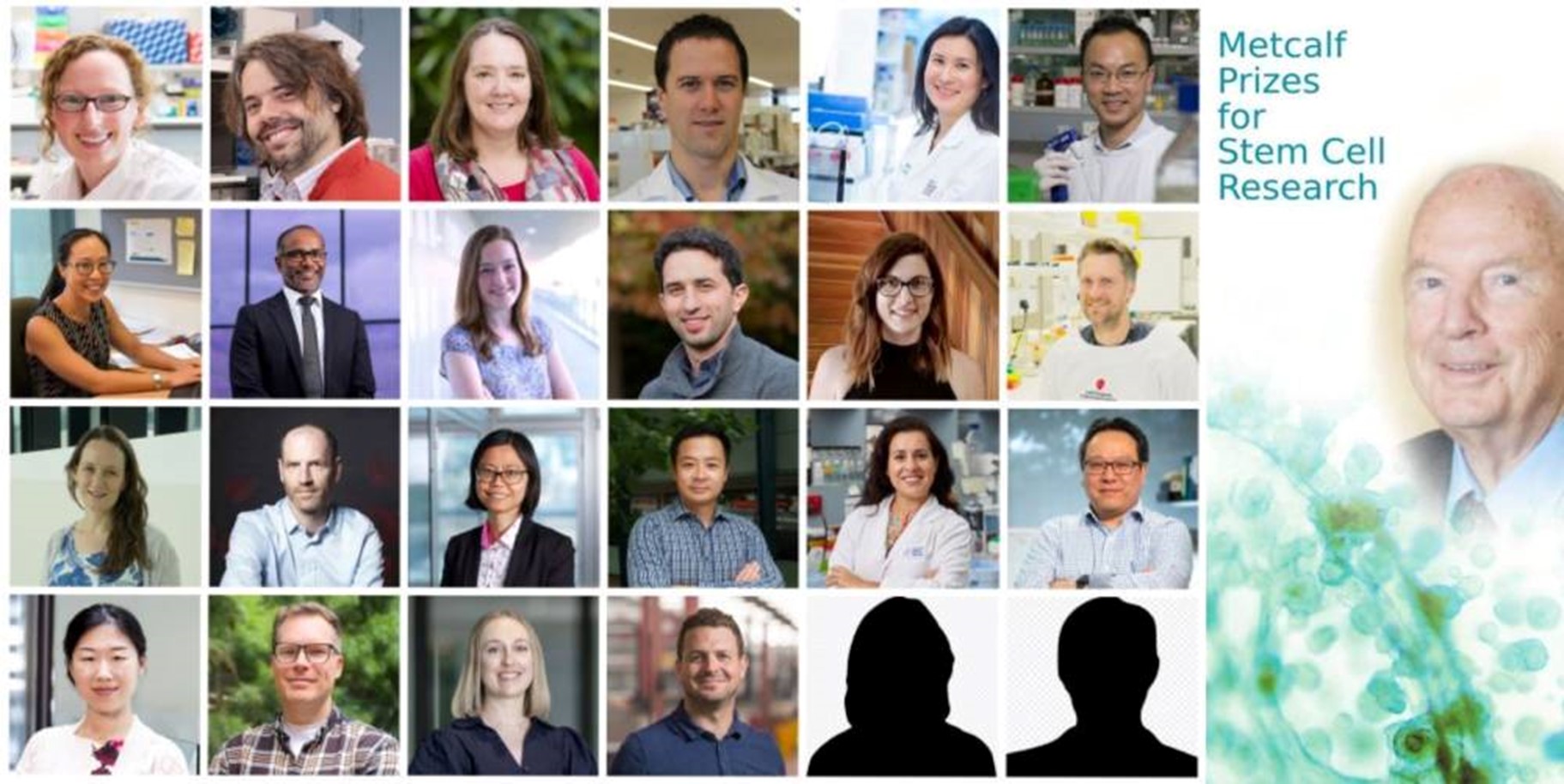
Applications for $60,000 prizes for stem cell research now open
Two up-and-coming leaders in stem cell science will receive $60,000 each to boost their career to the next level. If you know a promising stem cell researcher, encourage them to apply.
The 2025 Metcalf Prizes for Stem Cell Research are open to mid-career researchers working in stem cell research in Australia. They could be working in medicine or agriculture, government or academia, if they have a primary focus on stem cells.
Applications are open to those who have completed their PhD or MD (research-based) within the past five to 10 years (from August 2015 to August 2020). Allowances will be made for research-career breaks, such as maternity leave.
The winners will be chosen for their scientific excellence, proven leadership ability, and the potential to have a continuing influence on stem cell research in Australia. Past Metcalf Prize winners include scientists conducting fundamental research in cell biology, cell reprogramming, and genetics; or working on leukaemia and other cancers, heart failure, osteoarthritis, multiple sclerosis, inherited eye diseases, and many other causes of human suffering.
You can read more about the Metcalf Prize alumni and the research they were awarded for on our website.
The Metcalf Prizes for Stem Cell Research recognise and honour the exceptional contribution made to stem cell research by the late Professor Donald Metcalf. Over his 50-year career, Don helped transform cancer treatment and transplantation medicine and paved the way for potential stem cell therapy for many other conditions.
The Metcalf Prizes form part of the Foundation’s mission to support researchers whose work improves our understanding of the human body and the diseases that affect it and leads to proven stem cell therapies.
Applications close Monday 11 August 2025. We encourage last year’s unsuccessful applicants to apply again this year if they are still eligible.
To apply online, and for a full list of criteria and conditions, head to the Foundation’s website: www.stemcellfoundation.net.au/metcalf_prizes.
If you have any questions about eligibility or the application process, please contact Tanya Ha at Science in Public, who administers the awards for the Foundation: [email protected]
Stem cell news from around the world
Between newsletters, we share stem cell news on social media:
Here are a few stories we’ve shared recently:
Xinhua: Scientists create tiny hearts to revolutionise heart disease treatment – research from Metcalf Prize winner James Hudson. Paper.
Cosmos Magazine: 3D-printed pancreas cells could be the future of diabetes. And a separate study based on a small, two-phase clinical trial shows new stem cell therapy may cure severe Type 1 Diabetes, as reported by multiple news outlets including The New York Times.
The New York Times: Are stem cell therapies safe to try? Article raises questions around regulatory oversight of stem cell therapy and potential public confusion about the difference between scientifically supported treatment and untested therapies. Plus, related article: Kennedy Says ‘Charlatans’ Are No Reason To Block Unproven Stem Cell Treatments.
7 News Australia: Results of Australian-led clinical trial in stem cell transplant for blood cancers ‘set to change 40 years of standard practice’. Paper.
The Independent: A naturally occurring molecule, prostaglandin E2 (PGE2), may counteract stem cell ageing.
USA Today podcast The Excerpt: Stem-cell based therapy that creates nerve cells developed by researchers at Memorial Sloan Kettering Cancer Center.
The Stem Cell Report podcast: The Florey’s Professor Clare Parish talks about latest research on Parkinson’s disease, cell therapy and exercise.
Monash University: Scientists from the Monash Institute of Pharmaceutical Sciences secure a Commonwealth Government-backed $953,751 Medical Research Future Fund grant to find new medicines for dementia by ‘lighting up’ human brain cells.
Walter and Eliza Hall Institute of Medical Research: Researchers discover how to block cells dying in a finding that could lead to new treatments for neurodegenerative conditions.
BBC Science Focus: Allen Institute research shows 2 distinct phases of Alzheimer's.
Nature: Stem cells coaxed into most advanced amniotic sacs ever grown in the lab.
National Geographic: The ability to reverse damage to your lungs and heart is tantalisingly close.
Geek Wire: Allen Institute’s 10-year ‘CellScapes’ project leverages stem cell models and integrates imaging, modelling and synthetic biology to devise mathematics to understand how cells come together to shape life.
BBC Wildlife Magazine: Conservation efforts in the lab to help northern white rhinos avoid extinction.
Herald Sun: Exclusive report on a study run by IVF Australia ‘using stem cells that mimic healthy female ovaries’.
Science Signalling: Gut stem cells get stressed out.
Yale University: Morphogens or ‘molecular traffic cops’ regulate development of stem cells into specialised brain cells.
Medical News: Retinal stem cells hiding in plain sight. Paper.
Neuroscience News: Aging shifts stem cells into overdrive to create more belly fat.
About the Foundation
The National Stem Cell Foundation of Australia is an ATO-registered tax-deductible Health Promotion Charity dedicated to promoting the study and responsible use of stem cells to reduce the burden of disease.
The Foundation’s activities include:
- supporting research that pursues cures for as-yet-untreatable diseases
- building a community of people with a shared interest in stem cell science
- providing the Australian public with objective, reliable information on both the potential and risks of stem cell medicine.
Showing 1 reaction