Preterm birth complications are the leading cause of death and disability world-wide in children aged under five – World Health Organisation.
Every year, more than 26,000 Australian babies are born preterm (before 37 weeks). While medical advances mean most preterm babies now survive, their risk of developing serious brain injury and long-term neurological disability – including cerebral palsy – remains high.
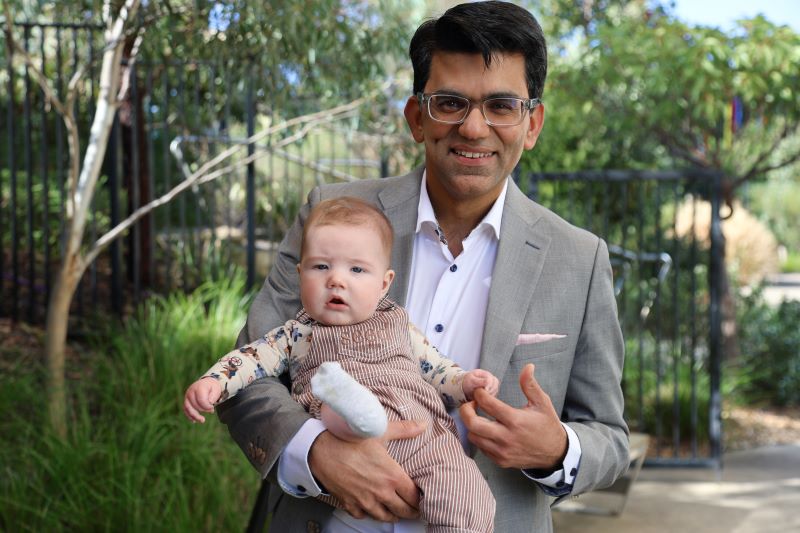
Unacceptably so, according to Monash University researcher, Associate Professor Atul Malhotra, Senior Consultant Neonatologist and Head of Monash Children’s Hospital’s Early Neurodevelopment Clinic.
Atul is leading a clinical trial – backed by a $100,000 Matched Funding Program grant co-funded by the Foundation and Cerebral Palsy Alliance – to explore feasibility and safety of using donated umbilical cord blood-derived cells to help repair brain injury associated with preterm births, starting with the most severe cases.
The Phase-1 ALLO trial will involve at least 20 preterm babies with severe brain injury. Read the protocol: https://doi.org/10.1136/bmjopen-2025-100389.
Cord blood, collected from the umbilical cord after a baby is born, not only contains all components of whole blood, but is a rich source of stem cells that could potentially dampen inflammation and repair damaged brain tissue.
“My main motive in life is to change outcomes for these preterm babies with significant problems,” says Atul. “Preterm birth survival is very good, but we need to do better when it comes to long-term outcomes because 20 to 30 per cent and sometimes even more have significant problems going forward.
“Currently, there are no effective therapies to prevent or treat preterm brain injury in this vulnerable group, placing immense stress on families and the healthcare system.”
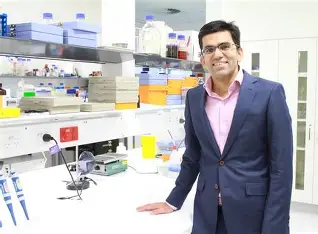 Atul described the ALLO trial as a critical ‘stepping stone’ to remedy this, marking the second time he’s been awarded a Matched Funding Program grant by the Foundation.
The first grant, in 2022 and co-funded by a private donor, supported the separate CORD-SaFe study which successfully demonstrated the feasibility and safety of treating extremely premature babies with cells derived from their own cord blood. A paper on the trial reported that 23 babies (born before 28 weeks) experienced no serious adverse events: https://doi.org/10.1016/j.ebiom.2024.105492.
Atul praised the Foundation for its support of both studies, which he hopes will ultimately lead to larger international randomised control trials to test efficacy of these stem cell therapies to prevent or treat preterm brain injury.
“What’s exciting about the ALLO trial is that it’s the first time a public cord blood bank is releasing healthy babies’ donated cord blood units for research purposes,” he said.
“No-one has done this before anywhere in the world – giving genetically unrelated donor cells to these preterm babies. The risks are higher, although still very small, which is why we’re starting with the severe cases.”
The ALLO trial defines ‘feasibility’ as finding a partially matched blood cord unit for more than 60 per cent of participants, and ‘safety’ as an absence of severe adverse events within 48 hours of infusion or graft-versus-host disease within three months of infusion.
To date, six enrolled babies have received a single intravenous infusion of partially matched cord blood cells from the Bone Marrow Donor Institute Cord Blood Bank.
Atul expects to complete trial recruitment by end of 2026.
If all goes well, he said the ALLO trial will also help overcome challenges in collecting preterm babies’ own cord blood cells, taken from as little as seven millilitres of umbilical cord blood – just under two teaspoons’ worth – to create a single dose of cell therapy.
The challenges extend to unpredictability of preterm births and the need for swift access to cord blood cells given many preterm births occur outside a tertiary hospital with insufficient notice or inadequate volume of available cord blood.
“So, in many cases autologous cell therapy, involving use of babies’ own cells, is simply not an option.”
Looking to the future, Atul hopes the ALLO trial will open the door to new therapies that support ‘brain healing’ in preterm babies, ultimately leading to practical application in hospitals.
“Brain healing is a good way of explaining what we hope to achieve through cord blood cell therapy,” he said.
“Healing in this context means dampening inflammation or dampening negative cells which are flooding the brain at the time of injury. So, if we can start the healing process at an early stage, hopefully the brain suffers less long-term damage.”
Recent data from the Australian and New Zealand Neonatal Network reveals severe intraventricular haemorrhage or bleeding in the brain affects around five per cent of preterm babies born before 32 weeks and 11.6 per cent of those born before 27 weeks, with up to 65 per cent of survivors developing cerebral palsy.
Cerebral palsy, a group of conditions that affect movement and posture caused by damage to the developing brain, is the most common physical disability in childhood, affecting one in 700 Australian babies.
Professor Nadia Badawi, Cerebral Palsy Alliance Chair of Cerebral Palsy Research (The University of Sydney), said the group was proud to partner with the Foundation on priority research, noting the Australian cerebral palsy register ‘has shown that nearly 45 per cent of people with cerebral palsy were born prematurely’.
“Associate Professor Atul Malhotra is leading the way nationally in researching cell therapies for babies born too soon, and we hope his impactful work may one day lead to better outcomes for preterm babies and their families,” Professor Badawi said.

Showing 1 reaction