Dr Maria Di Biase has created a ‘brain bank’ of schizophrenia: blobs of brain cells from 100 patients, growing in the lab. She’s using these brain organoids to develop urgently needed new approaches to diagnosis and treatment.
Schizophrenia affects about one in 300 people worldwide. It usually manifests in adolescence. People with schizophrenia lose an average 15 years of lifespan.
Each case is different, so it can often take years to establish stable treatment. And the treatments can have life-changing side effects above and beyond the impact of the illness.
 Maria and her team at The University of Melbourne have successfully taken blood from patients and persuaded blood cells to turn into stem cells, and then grow into brain cells. She can then study each person’s unique schizophrenia using these blobs of human brain tissue.
Her vision is to use a schizophrenia patient’s own cells to choose the right treatment the first time; a vision which will be supported by one of two $60,000 Metcalf Prizes from the National Stem Cell Foundation of Australia.
Schizophrenia is a chronic, complex brain disorder that causes psychosis. It affects between 150,000 and 200,000 Australians who may struggle with daily life, social activities and education or work.
Schizophrenia can distort the way someone thinks, feels, behaves and perceives the world around them but symptoms can vary substantially from person to person. The complex disorder is notoriously difficult to study because we can’t easily and safely sample human brain tissue.
Antipsychotic medications, usually the first line of treatment, don’t adequately work in many cases. They can also have side effects, such as weight gain, dizziness, dry mouth, sedation and movement disorders.
Side effects, such as weight gain, can lead to other life-limiting diseases, including cardiovascular disease and diabetes. People with schizophrenia spectrum disorders lose an average 15 years of life.
“Severe psychiatric disorders are biologically diverse, which means that one drug won’t help everyone,” Maria explains. “If one treatment doesn't work, which is often the case, another is trialled.”
The harrowing process of going through different treatments can be very challenging for patients, particularly if they are also experiencing delusions and hallucinations, and for everyone around them, including loved ones and health care teams.
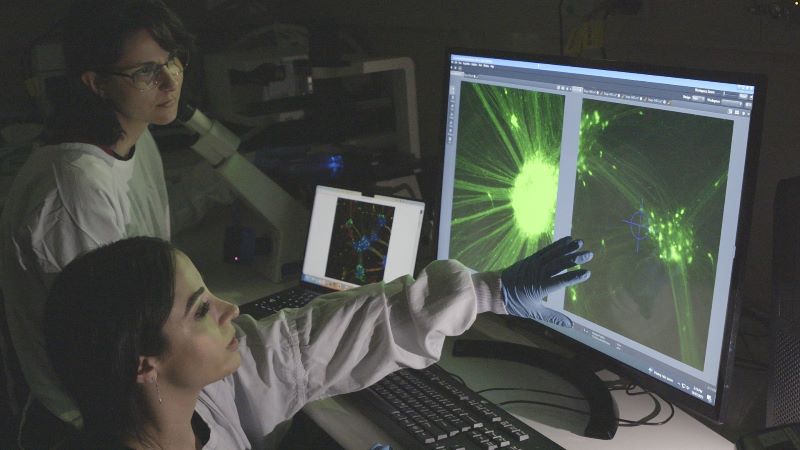
By growing brain organoids from patient-derived stem cells, Maria can effectively recreate aspects of that individual’s developing brain in a petri dish. This allows her team to study biological changes up close and identify those specific to the individual.
“We hope we can use this information to take the trial and error out of treatment and nominate the right ones from those that are currently available,” she says. “But in future we could use this knowledge to develop new and better treatments.
“My long-term vision is to pioneer personalised treatments for individuals with schizophrenia by conducting research that incorporates their unique genetic, molecular and functional illness profiles.
“This is a big vision, but for now we need to do the fundamental science to pinpoint what’s happening in these cells and how genes may be driving those changes.”
To that end, Maria has created a psychiatry ‘bank’ of stem cells from more than 100 donors, including many patients diagnosed with schizophrenia, matched with their brain scans, to shine a light on the many differences in genetics, biology and patient experiences.
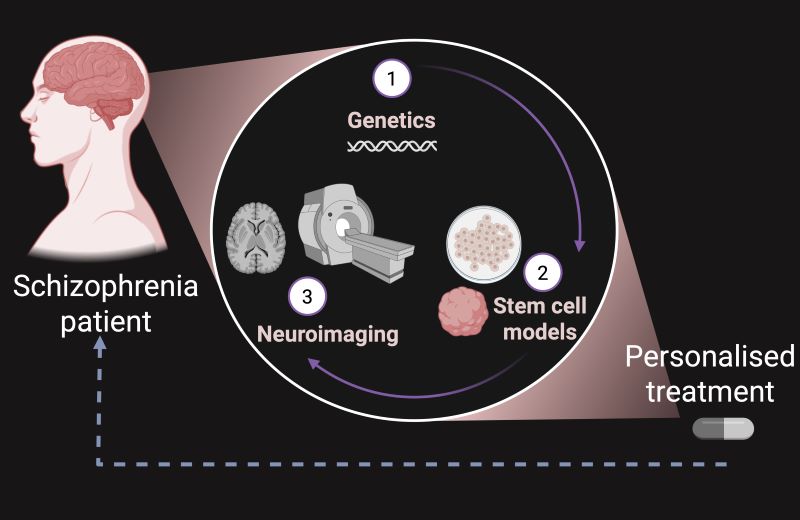 This allows Maria and her colleagues see what’s happening from a genetics perspective and at a cellular level during the development of the condition and match it to what they’re seeing with each patient’s brain scan and symptom profile.
Maria hopes that winning a Metcalf Prize will bring attention to stem cell research in the psychiatry space.
“There is a lot of stigma around psychiatric disorders like schizophrenia but, at the end of the day, these are complex brain illnesses. Tackling them requires new approaches like stem cell models, and a serious commitment to fundamental research,” she says.
“To have the Foundation and the Metcalf Prize jury award me the prize shows they view my research as a promising approach in psychiatry and that is extremely validating and rewarding.”
Maria received a PhD in Neuroscience from The University of Melbourne in 2018. After a postdoctoral position at Harvard Medical School in America, she returned to Australia to establish her own independent research program, uncovering developmental brain mechanisms underlying severe psychiatric illness.
Maria is a Rebecca Cooper and NHMRC Fellow leading the Stem Cell Disease Modelling Laboratory and Systems Laboratory at The University of Melbourne, Australia.
Video: 7News speaks to Maria about her Metcalf Prize winning research.
Schizophrenia facts
- Schizophrenia affects approximately 24 million people or 1 in 300 people worldwide.
- About 64,000 Australian adults (aged 18–64) are treated each year for a psychotic illness in public mental health services—about 1 in 200 people.
- People with schizophrenia are 2 to 3 times more likely to die prematurely compared to the general population.
- People with schizophrenia spectrum disorders lose about 15 years of life on average.
- Schizophrenia most commonly manifests in late adolescence to early adulthood.
- A considerable number of patients with schizophrenia do not respond adequately to antipsychotic drugs.
- There are a range of effective care and management options for people with schizophrenia and at least 1 in 3 people with schizophrenia will fully recover.

Showing 1 reaction