Could cord blood repair injured brains of babies born too soon?
Melbourne neonatologist and researcher Associate Professor Atul Malhotra is on a mission to develop cellular therapy aimed at repairing brain injury associated with preterm births. With the backing of the Foundation and Cerebral Palsy Alliance, he’s leading a clinical trial involving umbilical cord blood. Read on for more information.
Many expectant parents are curious about the potential to donate their child’s cord blood to one of Australia’s public cord blood banks or bank it privately. We have prepared an information page with the help of the Foundation’s Science and Ethics Board Committee to answer common questions. More below.
September saw Blood Cancer Awareness Month. Every year in Australia, about 1,200 patients with blood cancers and disorders search for a blood stem cell donor. If you’re aged 18 to 35, you can join the stem cell donor registry managed by Stem Cell Donors Australia. Signing up requires a simple cheek swab or blood test. Find out more: stemcelldonors.org.au/why-you-matter/why-donate/
See beautiful stem cell images and the favourites from the public vote in this year’s reNEW art exhibition. More below.
We’re reviewing a strong line-up of applicants for the 2025 Metcalf Prizes for Stem Cell Research. Winners will be announced in November, ahead of the Australasian Society of Stem Cell Research Annual Meeting on the Gold Coast, Queensland. Read about Metcalf Prize alumni on our website.
Finally, in our regular round-up of stem cell news, you can read about an Australian clinical trial to treat spinal cord injury involving transplantation of olfactory cell nerve bridges; living skin grown in Queensland lab; how stressors of space can age blood stem cells; 3D-printed mini placentas to study pregnancy complications; multi-region brain organoids; and more.
Kind regards,
Dr Graeme L Blackman AO
Chairman, National Stem Cell Foundation of Australia
In this bulletin:
- Could cord blood cells repair injured brains of babies born too soon?
- Cord blood basics. What you should know
- See stem cell science turned into art
- Stem cell news from around the world
Could cord blood cells repair injured brains of babies born too soon?
Preterm birth complications are the leading cause of death and disability world-wide in children aged under five – World Health Organisation.
Every year, more than 26,000 Australian babies are born preterm (before 37 weeks). While medical advances mean most preterm babies now survive, their risk of developing serious brain injury and long-term neurological disability – including cerebral palsy – remains high.
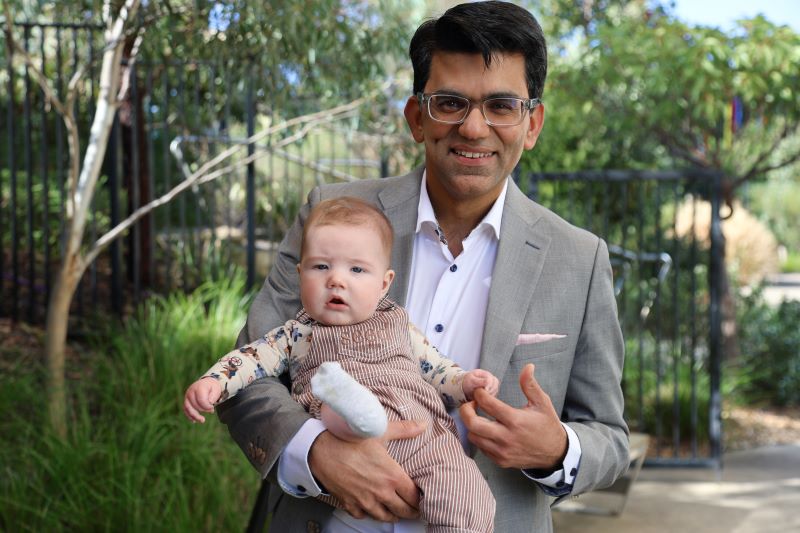 Unacceptably so, according to Monash University researcher, Associate Professor Atul Malhotra, Senior Consultant Neonatologist and Head of Monash Children’s Hospital’s Early Neurodevelopment Clinic.
Atul is leading a clinical trial – backed by a $100,000 Matched Funding Program grant co-funded by the Foundation and Cerebral Palsy Alliance – to explore feasibility and safety of using donated umbilical cord blood-derived cells to help repair brain injury associated with preterm births, starting with the most severe cases.
The Phase-1 ALLO trial will involve at least 20 preterm babies with severe brain injury. Read the protocol here: https://doi.org/10.1136/bmjopen-2025-100389.
Cord blood, collected from the umbilical cord after a baby is born, not only contains all components of whole blood, but is a rich source of stem cells that could potentially dampen inflammation and repair damaged brain tissue.
“My main motive in life is to change outcomes for these preterm babies with significant problems,” says Atul. “Preterm birth survival is very good, but we need to do better when it comes to long-term outcomes because 20 to 30 per cent and sometimes even more have significant problems going forward.
“Currently, there are no effective therapies to prevent or treat preterm brain injury in this vulnerable group, placing immense stress on families and the healthcare system.”
Atul described the ALLO trial as a critical ‘stepping stone’ to remedy this, marking the second time he’s been awarded a Matched Funding Program grant by the Foundation.
Cord blood basics

If you are an expectant parent considering banking your baby’s cord blood, these are the things you need to know.
Cord blood – collected from a baby’s umbilical cord following birth – is rich in blood-forming stem cells. Harvested cord blood and cord tissue can be frozen in cell banks for potential future use.
Expectant parents can:
- donate their child’s cord blood to a public cord blood bank, making it available to people from around the world looking for a stem cell transplant match
- pay for a private bank to collect and store the cord blood in case the child or a family member needs it in the future, or
- allow the hospital to dispose of the umbilical cord and its blood, along with other tissue from the birth.
Donated cord blood is already saving lives. The cells it contains can be used in place of bone marrow transplants for children and adults with conditions such as blood cancers (including leukaemia and lymphoma), and genetic disorders like aplastic anaemia and thalassaemia.
However, successful transplantation depends on matching the human leukocyte antigen (HLA) tissue type of the donor and recipient. Because this compatibility is complex and varied, access to a broad and diverse bank of cord blood units increases the chances of finding a suitable match for patients in need.
Donating to a public bank is a meaningful way to support broader community health given the importance of increasing donor diversity to improve matching success. Private cord blood banking is also an option for families who wish to store cells for potential personal use, especially in the presence of known medical conditions or family history.
Read more online. And please share this information with friends who might be interested.
Public votes and jury select stem cell art

View the ‘tentacles of perception,’ a ‘colourful ecosystem of mini-kidneys’, ‘the brain’s gatekeeper’, ‘David and Goliath’ or one of the other finalists in an art competition and exhibition to celebrate Global Stem Cell Awareness Day 2025 (October 8).
Visit reNEW's #ARTxSCIENCE virtual gallery to see a beautiful, colourful exhibition of cell and scientific photographs taken by the people who study them. It’s a clever initiative that raises awareness of the life-saving potential of stem cell research and the researchers behind it.
12 finalists have been selected by a public vote, with the final winner (selected by an international jury) to be revealed on Global Stem Cell Awareness Day.
Visit: https://renew.science/artxscience/
Stem cell news from around the world
Between newsletters, we share stem cell news on social media:
Here are a few stories we’ve shared recently:
The Conversation: University of Technology Sydney team creates 3D-printed placental organoids, offering a new way to study pregnancy complications like preeclampsia. Paper.
ABC News: University of Queensland researchers use stem cells to create human skin replica which contains blood vessels, capillaries, hair follicles, layers of tissue and immune cells.
ABC News: Griffith University commences clinical trial to transplant cells from the noses of paralysed patients into their spinal cords. Trial details: www.griffith.edu.au/research/institute-biomedicine-glycomics/clem-jones-centre/themes/spinal-cord-injury-nerve-bridge-transplantation-trial
NBC News: US researchers show stressors of space like microgravity and cosmic galactic radiation can speed up molecular ageing of blood stem cells. Paper.
Live Science: Mini brains reveal secrets of how key brain cells form in the womb. Paper.
Science Alert: ‘Next generation’ multi-region brain organoids created at Johns Hopkins University Paper.
The Washington Post: University of Colorado researchers show amniotic fluid stem cells can be safely collected from vaginal fluid after childbirth.
The Guardian: Lab-grown sperm and eggs just a few years away, scientists say.
Read more stories in our social channels: LinkedIn, Twitter/X, Bluesky and Facebook.
Showing 1 reaction