Could we give cancer-killing immune cells superpowers?
Every day, a small population of immune cells, barely one to three per cent of the white blood cells patrolling the body, quietly stops most cancers before they start.
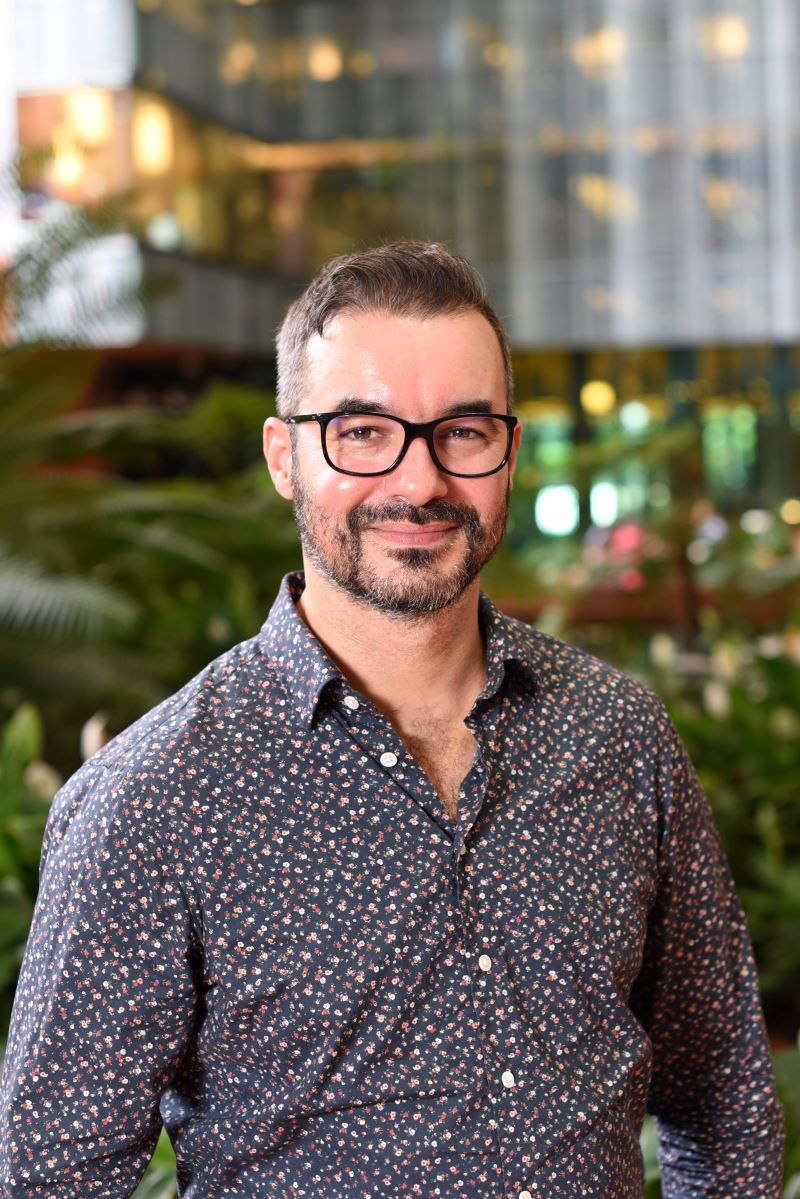 “They’re constantly patrolling and checking if there are other cells that could become cancers,” says Associate Professor Fernando Guimaraes, an immunologist at the University of Queensland’s Frazer Institute. “If there’s a risk, they eliminate them.”
These are natural killer (NK) cells, and turning their inbuilt cancer-hunting ability into a treatment is the focus of Fernando’s lab. Using stem cell techniques, his team grows NK cells in bulk and gives them what he calls “superpowers” — genetic engineering that sharpens their ability to recognise and destroy tumours.
His lab is targeting solid cancers that still lack effective treatments: triple-negative breast cancer, recurrent ovarian cancer, and paediatric sarcomas.
Getting there depends on funding that, until recently, kept narrowly slipping away.
“I have been applying for NHMRC fellowships for years, and it’s always close but not close enough,” he says.
The Foundation and the Australasian Society for Stem Cell Research (ASSCR) are piloting a new Near-Miss Funding Program to overcome this cycle of application and near-miss rejection. Fernando is one of two researchers awarded $100,000 each so that they can continue their research and strengthen their programs for resubmission to major funding bodies.
Fernando’s goal is a “living drug”: a cell therapy that can be manufactured at scale, frozen, and infused into a patient when they need it.
That distinguishes it from CAR T-cell therapy, the best-known form of cellular immunotherapy, which must be custom-built from each patient’s own blood, a process that takes around three months. That therapy costs roughly half a million dollars per patient and works only against blood cancers.
NK cells don’t carry this constraint. Unlike T cells, they don’t trigger a rejection reaction. Consequently, they can be sourced from a donor and given to anyone, meaning, potentially, an off-the-shelf therapy ready whenever it’s needed.
“That’s the dream,” Fernando says, “an off-the-shelf product that could be readily available for the right patient at the right time.”
For emerging research leaders like Fernando, missed funding rounds mean losing trained staff and stalling PhD students who can’t be paid to keep going.
“This near-miss funding really helps us keep the momentum,” he says, “so we can keep doing the research without these major disruptions… For me, the funding is a lifesaver.”
The support is also compounding: it funds the preclinical data his team needs to be competitive for the next major grant.
Separately, his lab recently secured MRFF infrastructure funding to build IMPACT, a dedicated Brisbane facility for manufacturing cell therapies at the quality and scale clinical trials demand — turning the “off-the-shelf” vision into physical infrastructure.
Asked how far off a treatment might be, Fernando is candid: “It depends on how the biology works with us… if everything goes well, without any potential pitfalls, hopefully in three, four years we can make a clinical trial.”
For now, the Foundation’s support is keeping the work moving steadily toward that trial, one preclinical result at a time.

Showing 1 reaction