Anniversary of Nobel Prize winning paper
Stem cell research 20 years ago was primarily focused on two sources: adult stem cells found in developed tissues such as bone marrow, fat, skin, and embryonic stem cells derived from the inner cell mass of three- to five-day-old embryos. Embryonic stem cells can self-renew for long periods of time and are ‘pluripotent’, meaning they can give rise to most cell types in the body.
The understanding that embryonic stem cells could become any cell type – termed ‘pluripotency’ – brought with it the exciting potential to develop new treatments or replacement tissue. However, their origin raised ethical concerns for many people.
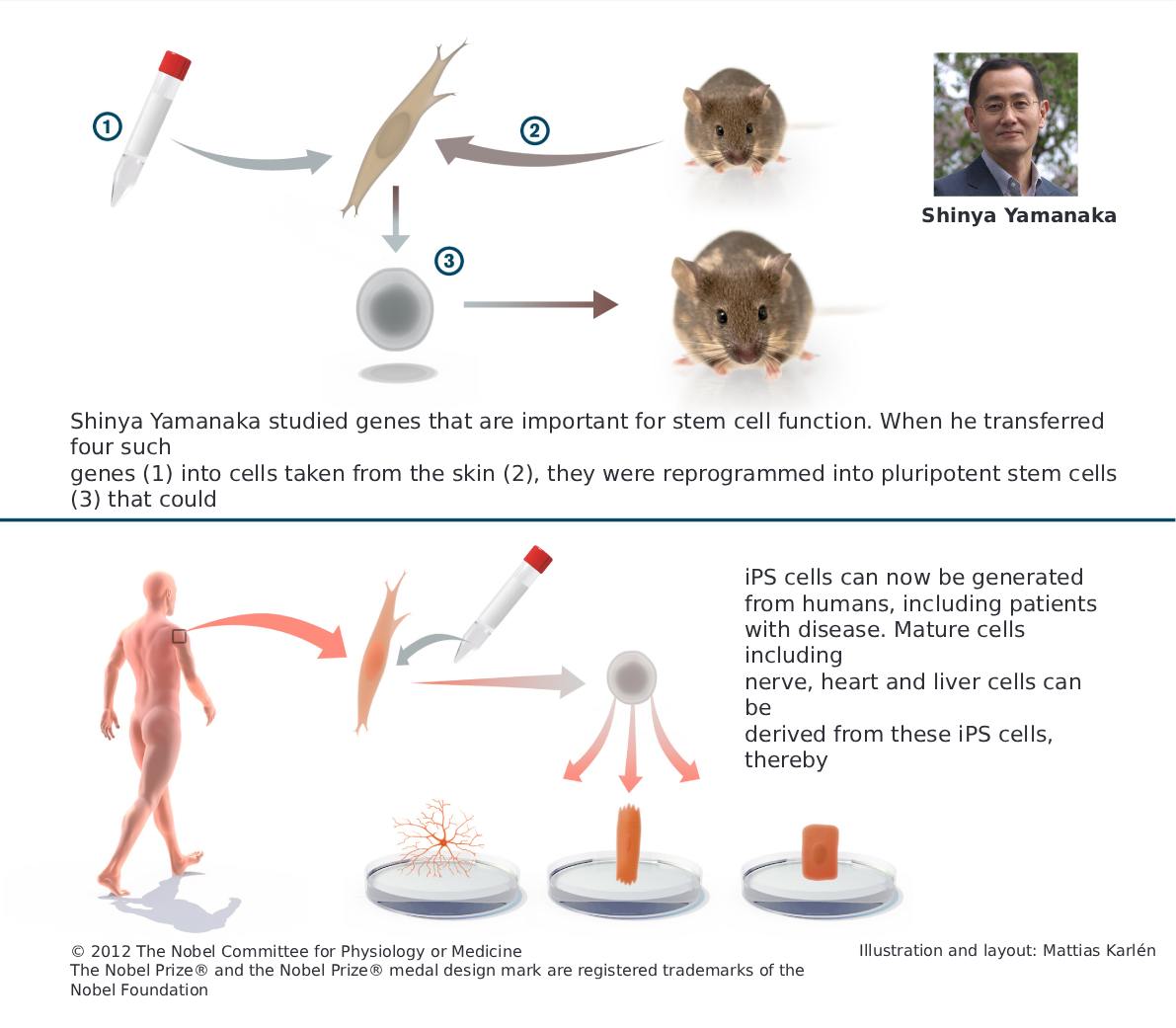
Then, in 2006, Japanese physician and researcher Shinya Yamanaka and fellow scientist Kazutoshi Takahashi reported a breakthrough in a landmark paper published in Cell. They showed that mature adult mouse cells could be reprogrammed into so-called ‘induced pluripotent stem cells’ (iPSCs), which like embryonic stem cells can give rise to most cell types in the body.
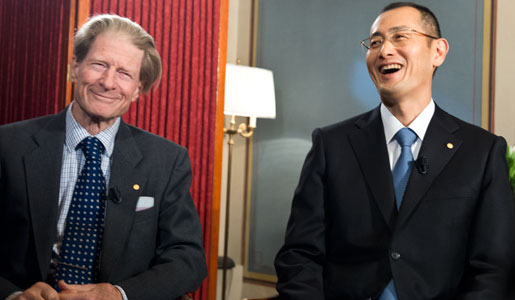 Yamanaka won the 2012 Nobel Prize in Physiology or Medicine jointly with British developmental biologist Sir John B. Gurdon (pictured), “…two scientists who discovered that mature, specialised cells can be reprogrammed to become immature cells capable of developing into all tissues of the body. Their findings have revolutionised our understanding of how cells and organisms develop.”
Today, because of this work, cells from your body – usually skin or blood cells – can be reprogrammed and coaxed into becoming various cell types such as heart, kidney, muscle, eye, or even brain cells. It is a much easier way of obtaining cells with your genetic fingerprint than potentially more invasive and painful tissue biopsies.
That means that scientists can, for example, investigate an individual’s kidney disease, assembling 3D models made entirely from the patient’s cells that mimic structure and function of the kidney in the lab, and work out a personal treatment.
Scientists can also see how different diseases develop at a cellular level, identify the genes and processed involved, and identify new or better ways to treat the condition.
It also offers the possibility of generating patient-derived cells and tissues for transplantation, which can help reduce the risk of immune rejection.
Gene editing also raises the possibility of correcting disease-causing mutations in a patient’s cells, then generating healthy replacement cells genetically changed for therapy. In some cases, this approach has already reached the clinic. For example, gene-edited blood stem cells are now approved for sickle cell anaemia in some countries. This approach is also under development to treat other genetic conditions such as Duchenne muscular dystrophy, cystic fibrosis, and some inherited eye diseases.
Adult cells from healthy donors are also being reprogrammed back into stem cells both to study normal tissue and organ development, and to provide cells for therapy. Two treatments, one for heart failure and one for Parkinson’s disease, received conditional approvals from Japan’s health ministry, coinciding with the 20th anniversary of Yamanaka and Takahashi’s landmark 2006 paper.
The Foundation has invested in projects and scientists doing this kind of work. Examples include:
-
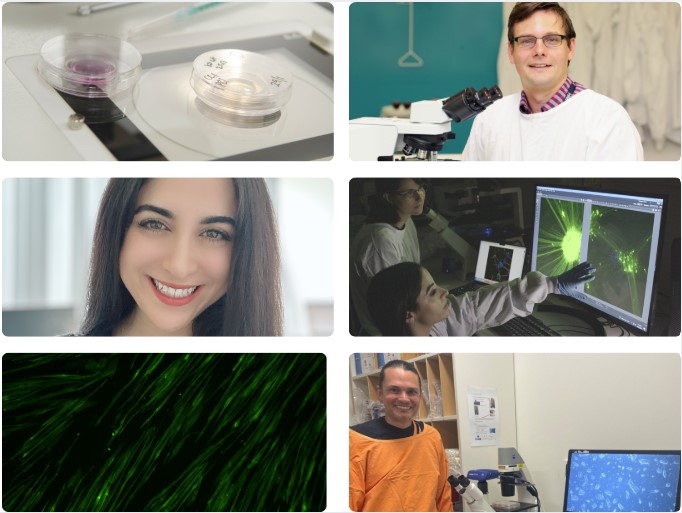 Giving cystic fibrosis patients longer, better lives: Gerard Kaiko, Hunter Medical Research Institute and the University of Newcastle
 - A brain bank of schizophrenia to fast-track diagnosis and better treatments: Maria Di Biase, The University of Melbourne
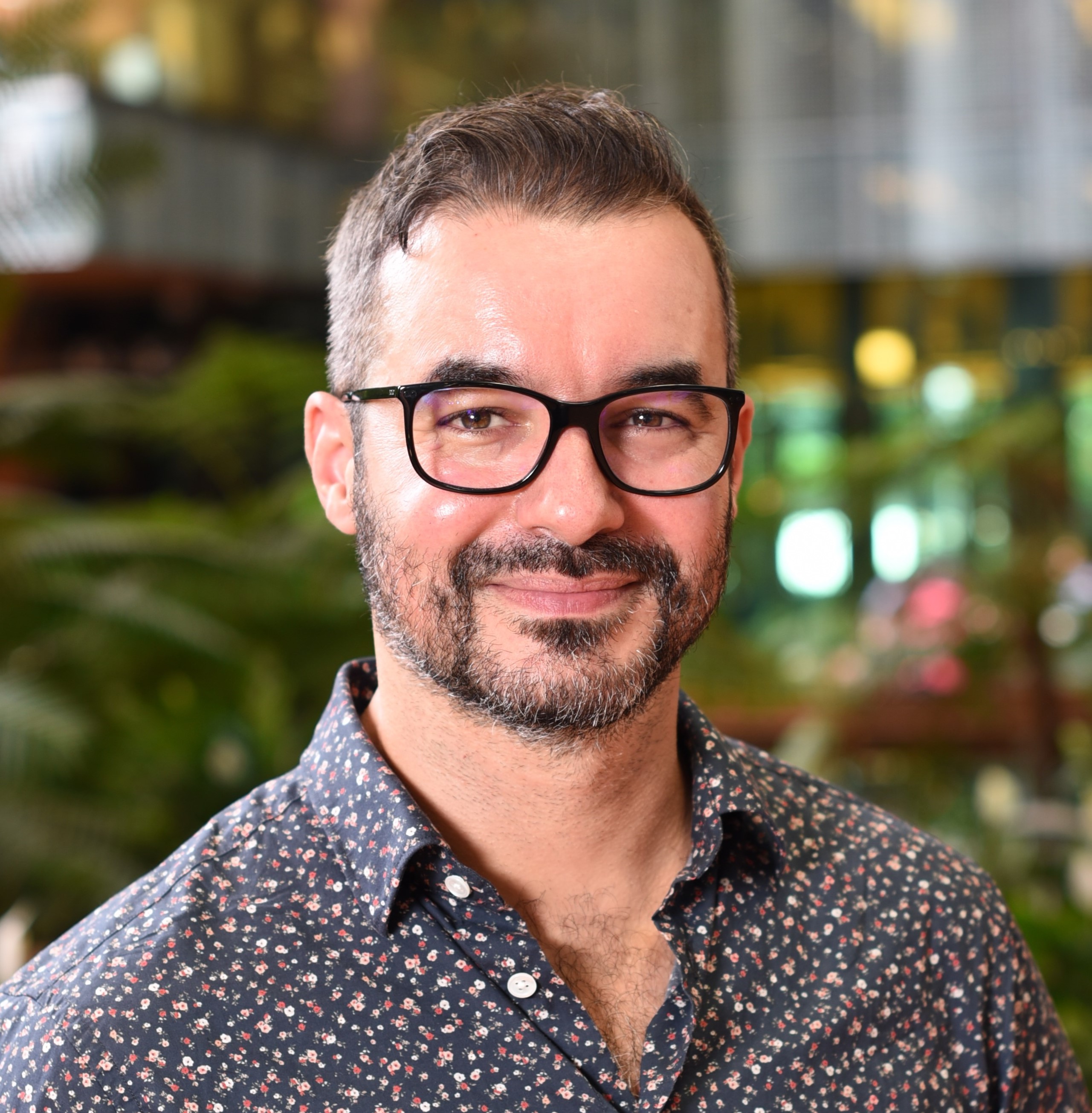
- Turning blood cells into muscle cells to test treatments for childhood muscular dystrophy: Dr Peter Houweling, Murdoch Children’s Research Institute.
We have been able to support these researchers thanks to the generosity of our donors. Please make a tax-deductible donation to the Foundation so that we can continue this work: www.stemcellfoundation.net.au/donate.
Read Nobel Laureate Prof Shinya Yamanaka’s reflections on this historical milestone in Cell Stem Cell: Two decades of induced pluripotent stem cell research: From discovery to diverse applications.
Inset photo: Sir John B. Gurdon (left) and Shinya Yamanaka (right). Copyright Nobel Media AB 2012; Photo by Niklas Elmehed.
Below: Diagrams showing Yamanaka's Nobel Prize-winning research and how it is applied today. Read more.

Showing 1 reaction