Can stem cells save sight? 20 years since Nobel discovery
Discover how stem cells could boost our understanding of eye diseases and potentially treat vision loss. Hear about the latest research and ask your own questions at a free online event, Future Medicine: Can stem cells save sight? on 21 May. More below.
It’s 20 years since the announcement that Japanese scientists had found a way to take specialised adult cells, such as skin or blood cells that usually cannot change, back in time and return them to a stem-cell-like state. This led to a Nobel Prize in 2012. What has this discovery led to? Find out below.
In June, we will open the 2026 Metcalf Prizes for applications. We caught up with lung researcher Dr Rhiannon Werder from Murdoch Children’s Research Institute (MCRI) in Melbourne to see how her career has progressed since winning a 2024 Prize. Read on for details. Spoiler: she has won an Al & Val Rosenstrauss Fellowship and other grant funding.
Plus:
- MCRI’s Katie Ayers has secured funding to uncover the genetic links between reproductive differences and the increased risk of cancer. We supported Katie’s earlier research into how sex development occurs in the womb and the role of genetics in variations.
- researchers in Mexico are calling for better regulation of its stem cell medical tourism industry
- the Australian-Danish reNEW collaboration has announced a spin-out company to deliver stem cell-derived heart tissue into clinical trials as a treatment for heart failure
- and more in our regular round-up of stem cell news from around the world.
Kind regards,
Dr Graeme L Blackman AO
Chairman, National Stem Cell Foundation of Australia
In this bulletin:
- Eye diseases and damage: what do stem cells have to offer?
- 20 years of turning adult cells back into stem cells
- Helping people with lung disease breathe easier
- Stem cell news from around the world
Eye diseases and damage: what do stem cells have to offer?
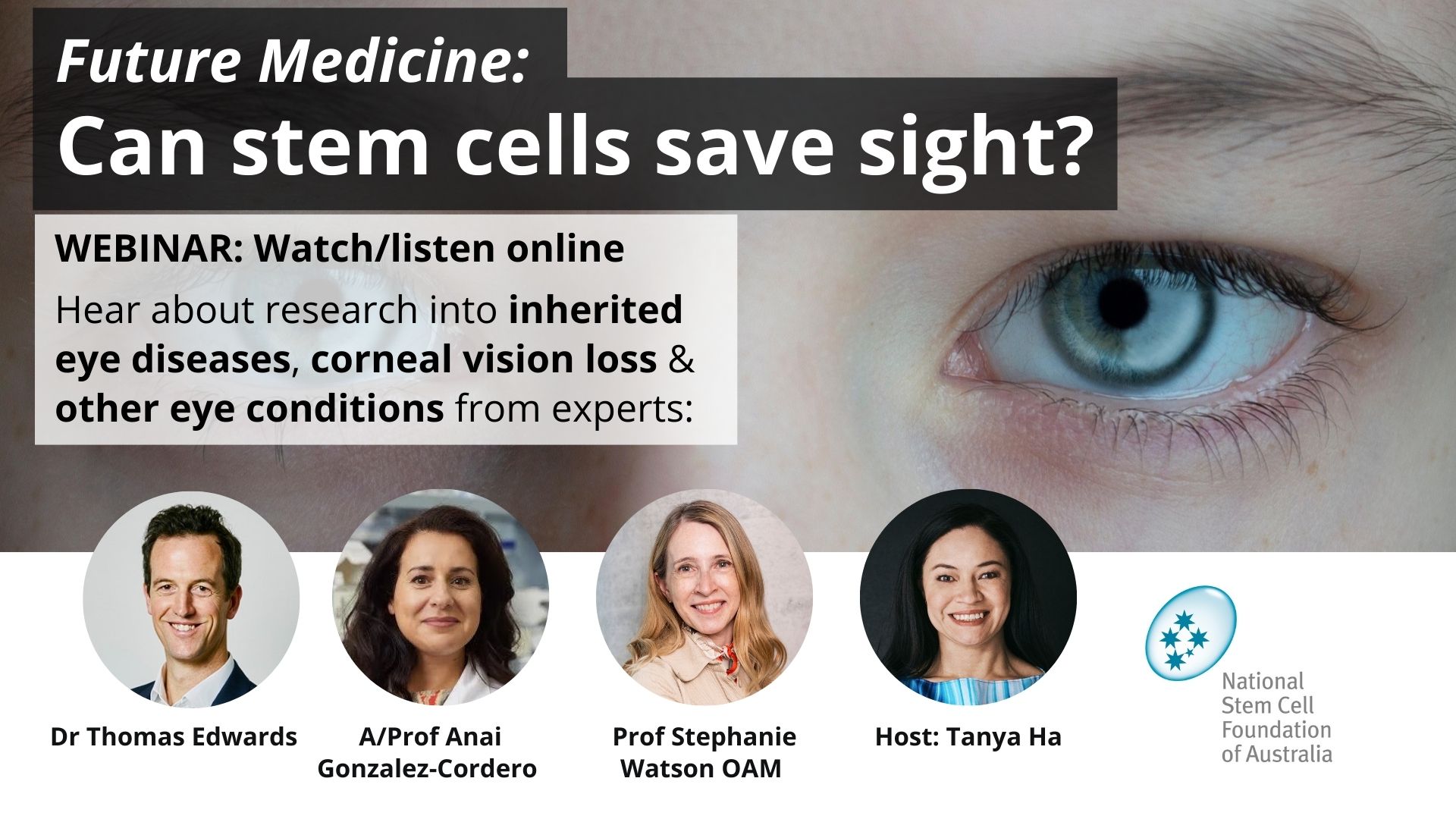
Hear the latest science and bring your questions to a free online event at 7:00pm AEST Thursday 21 May 2026.
Find out how stem cells are helping us understand and potentially treat causes of blindness and low vision including inherited eye diseases such as retinitis pigmentosa, Stargardt disease, Usher syndrome, and acquired conditions, such as corneal damage.
Three of Australia’s top stem cell researchers and eye clinicians will discuss Future Medicine: Can stem cells save sight? Come along to this free webinar with your questions for the panel.
Register to attend via Humanitix: https://events.humanitix.com/future-medicine-can-stem-cells-save-sight.
More than 453,000 Australians are blind or vision impaired, which affects their ability to read, work, drive, take part in hobbies, and other activities. Prescription glasses and contact lenses help many, but some eye injuries and diseases are currently beyond repair or cure.
About 19,000 Australians have an inherited retinal disease, caused by genetics. The lifetime cost of living with an inherited eye disease in Australia is about $5.2 million per person. Corneal blindness affects all ages and burdens over 2 million people worldwide.
The good news is that scientists and clinicians working with stem cells are:
- developing lab-grown or patient-derived healthy eye stem cells for transplantation to treat corneal blindness.
- running clinical trials for gene therapies targeting inherited eye diseases, which could potentially stop vision loss from progressing or even restore some sight.
- using a patient’s own cells to better understand their eye disease, test treatments, and potentially develop new cell sight-saving therapies.
Find out more from our panel of researchers and clinicians:
- Clinician-scientist and eye surgeon Dr Tom Edwards, Centre for Eye Research Australia
- Cell biologist Associate Professor Anai Gonzalez-Cordero, Children’s Medical Research Institute
- Eye surgeon Professor Stephanie Watson OAM, University of Sydney, Sydney Eye Hospital, Sydney Children's Hospital, and Prince of Wales Hospital.
The webinar is presented by the National Stem Cell Foundation of Australia and hosted by Tanya Ha, Director of Engagement at Science in Public.
Read more about the event and panellists online.
20 years of turning adult cells back into stem cells
Anniversary of Nobel Prize winning paper
Stem cell research 20 years ago was primarily focused on two sources: adult stem cells found in developed tissues such as bone marrow, fat, skin, and embryonic stem cells derived from the inner cell mass of three- to five-day-old embryos. Embryonic stem cells can self-renew for long periods of time and are ‘pluripotent’, meaning they can give rise to most cell types in the body.
The understanding that embryonic stem cells could become any cell type – termed ‘pluripotency’ – brought with it the exciting potential to develop new treatments or replacement tissue. However, their origin raised ethical concerns for many people.
Then, in 2006, Japanese physician and researcher Shinya Yamanaka and fellow scientist Kazutoshi Takahashi reported a breakthrough in a landmark paper published in Cell. They showed that mature adult mouse cells could be reprogrammed into so-called ‘induced pluripotent stem cells’ (iPSCs), which like embryonic stem cells can give rise to most cell types in the body.
Yamanaka won the 2012 Nobel Prize in Physiology or Medicine jointly with British developmental biologist Sir John B. Gurdon, “…two scientists who discovered that mature, specialised cells can be reprogrammed to become immature cells capable of developing into all tissues of the body. Their findings have revolutionised our understanding of how cells and organisms develop.”
Today, because of this work, cells from your body – usually skin or blood cells – can be reprogrammed and coaxed into becoming various cell types such as heart, kidney, muscle, eye, or even brain cells. It is a much easier way of obtaining cells with your genetic fingerprint than potentially more invasive and painful tissue biopsies.
That means that scientists can, for example, investigate an individual’s kidney disease, assembling 3D models made entirely from the patient’s cells that mimic structure and function of the kidney in the lab, and work out a personal treatment.
Scientists can also see how different diseases develop at a cellular level, identify the genes and processed involved, and identify new or better ways to treat the condition.
It also offers the possibility of generating patient-derived cells and tissues for transplantation, which can help reduce the risk of immune rejection.
Gene editing also raises the possibility of correcting disease-causing mutations in a patient’s cells, then generating healthy replacement cells genetically changed for therapy. In some cases, this approach has already reached the clinic. For example, gene-edited blood stem cells are now approved for sickle cell anaemia in some countries. This approach is also under development to treat other genetic conditions such as Duchenne muscular dystrophy, cystic fibrosis, and some inherited eye diseases.
Adult cells from healthy donors are also being reprogrammed back into stem cells both to study normal tissue and organ development, and to provide cells for therapy. Two treatments, one for heart failure and one for Parkinson’s disease, received conditional approvals from Japan’s health ministry, coinciding with the 20th anniversary of Yamanaka and Takahashi’s landmark 2006 paper.
The Foundation has invested in projects and scientists doing this kind of work. Examples include:
-
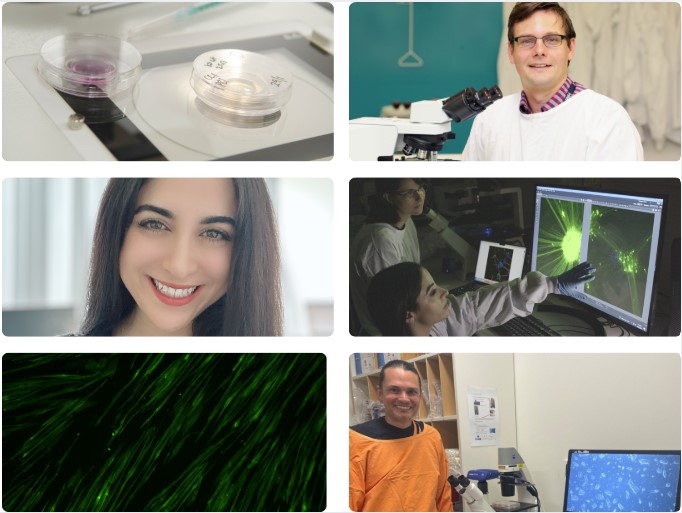 Giving cystic fibrosis patients longer, better lives: Gerard Kaiko, Hunter Medical Research Institute and the University of Newcastle
 - A brain bank of schizophrenia to fast-track diagnosis and better treatments: Maria Di Biase, The University of Melbourne
- Turning blood cells into muscle cells to test treatments for childhood muscular dystrophy: Dr Peter Houweling, Murdoch Children’s Research Institute.
We have been able to support these researchers thanks to the generosity of our donors. Please make a tax-deductible donation to the Foundation so that we can continue this work: www.stemcellfoundation.net.au/donate.
Read Nobel Laureate Prof Shinya Yamanaka’s reflections on this historical milestone in Cell Stem Cell: Two decades of induced pluripotent stem cell research: From discovery to diverse applications.
Helping people with lung disease breathe easier
Catching up with 2024 Metcalf Prize winner Rhiannon Werder
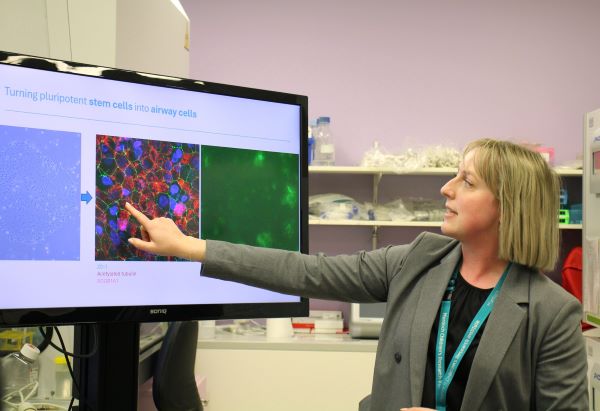 Dr Rhiannon Werder is growing ‘mini-lungs in a dish’, which mimic the complexity and function of lungs in living people.
The Group Leader at Murdoch Children’s Research Institute (MCRI) has already used stem cell-derived lung cells to create models of human genetic diseases, such as cystic fibrosis, and acquired lung diseases and infections, including the common cold.
Now she plans to grow three-dimensional models of human lung tissue, or ‘mini-lungs’, in a dish to better investigate respiratory infections and drive new treatment discoveries. She is also using stem cell-derived models to investigate chronic obstructive pulmonary disease (COPD). This progressive, incurable lung disease, often comprising chronic bronchitis and emphysema, makes breathing difficult.
In November 2024 she received one of our two annual $60,000 Metcalf Prizes. We caught up with Rhiannon to see how her career has progressed.
How has your work advanced since you won a Metcalf Prize?
My work has advanced in developing new protocols to generate a broader range of lung cell types for incorporation into our miniature lung tissue models. This has allowed us to build more physiologically relevant systems. Our first publication in this space has just been accepted!
This progress has translated into several major milestones, including receiving the Rebecca Cooper Foundation Al & Val Rosenstrauss Fellowship and an MRFF Chronic Respiratory Conditions grant focused on shared mechanisms of exacerbations in preschool wheeze and COPD.
The Metcalf funding was pivotal in helping us generate the preliminary data needed to secure these grants. In addition, the recognition from the prize provided a valuable boost to my profile at a key stage, helping to build collaborations and momentum for my research program.
What first drew you into stem cell research?
I was initially drawn to stem cell research by a curiosity about fundamental biology and a desire to better understand how complex cell types and tissues form. At the same time, I was motivated by the limitations of existing models for studying human disease. Stem cell systems provided a way to study disease processes directly in human cells, which felt both scientifically exciting and highly meaningful.
What’s the biggest difference you want your research to make and why?
The biggest difference I want my research to make is to enable the development of new treatments for respiratory diseases. Progress in this area has been relatively slow compared to other fields, and as a result, patients continue to live with significant symptoms and limited therapeutic options. Driving more effective, targeted interventions is what motivates my work and is the impact I am most committed to achieving.
Stem cell news from around the world
Between newsletters, we share stem cell news on social media:
Here are a few stories we’ve shared recently:
The Australian: How controversial cell therapy is making a comeback to fight incurable diseases [paywall]
reNEW: Spin-out company targets treatments for severe heart disease
MCRI: Denmark’s Queen Mary and King Frederick tour MCRI
Science: Stem cell therapies ‘come of age’ with two conditional approvals in Japan
Nature: Inside Mexico’s stem-cell industry
MCRI: Associate Professor Katie Ayers awarded Rebecca Cooper Fellowship for research exploring the genetic variations responsible for differences of sex development
Showing 1 reaction