$60K Metcalf Prizes open. Blood cancer & CAR T cells. Art of stem cells.
What do bone marrow transplants and CAR T-cell therapy have to offer in the treatment of blood diseases such as leukaemia and lymphoma? We caught up with 2021 Metcalf Prize winner clinician-scientist Siok Tey to find out. Read on for more.
Nearly 25 years ago, Australian artist Patricia Piccinini made a huge impact with her seminal work Still Life with Stem Cells, exploring the hope and future of biotechnology. She’s spent time in the lab with stem cell scientists to produce a new work that’s a feature of the major new exhibition EMERGENCE(Y). Read on for details.
The exhibition will also feature special talks with scientists, including kidney organoid pioneer Professor Melissa Little and Metcalf Prize winner and lung researcher Rhiannon Werder, who wants to help children with respiratory diseases breathe easier.
We’re looking for the next Metcalf Prize winners – up-and-coming researchers with big ideas: people like Siok Tey and Rhiannon Werder.
There are two prizes worth $60,000 each for one male and one female mid-career stem cell scientist. Applications close on Monday 3 August. Nominate yourself or encourage promising colleagues to apply. More below.
Two grants of $100,000 are also available to researchers who were close but unsuccessful in obtaining NHMRC Investigator grants. Read on for more information about our ‘Near-Miss Funding Program’, which we’re running in partnership with the Australasian Society for Stem Cell Research. Applications close this Friday morning. More below.
Last month, our eyesight forum experts revealed how stem cells are powerful disease research tools, their potential for cell therapies, and even as a diagnosis tool that unexpectedly led to the identification of a genetic disease that enabled a patient to have an effective treatment. You can watch a recording of this online forum. Read on for more information.
In other stem cell news:
- Melbourne scientists are working on making lab-grown blood cells.
- A man from Norway appears to have gone into long-term remission from HIV after receiving a stem cell transplant from his brother.
- Foundation-supported scientists, the genetics and reprogramming guru Ryan Lister and diabetes innovator Bernie Tuch, were appointed as a Member of the Order of Australia (AM) in the 2026 King’s Birthday Honours.
These stories and more in our regular round up of news.
Thank you to our donors and supporters who have enabled us to fund Siok’s research to improve blood cancer treatment, Ryan’s exploration off reprogramming cells, Bernie’s type 1 diabetes therapy, and our program of public events.
Discoveries need dollars! Please make a tax-deductible donation this end-of-financial-year to help us continue this work: www.stemcellfoundation.net.au/donate.
Kind regards,
Dr Graeme L Blackman AO
Chairman, National Stem Cell Foundation of Australia
In this bulletin:
- Stem cells and CAR T-cell therapy: what’s next for blood cancer treatment?
- Still life with stem cells: artist in residence at lab explored research advances
- Do you know the next top stem cell researcher?
- New grant opportunity for strong but unsuccessful Investigator Grant applicants
- WATCH: Experts discuss eye health, treatments for vision loss, and more
- Stem cell news from around the world
Stem cells and CAR T-cell therapy offer new blood cancer treatments
We ask 2021 Metcalf Prize winning cancer researcher Siok Tey about the buzz around new therapies.
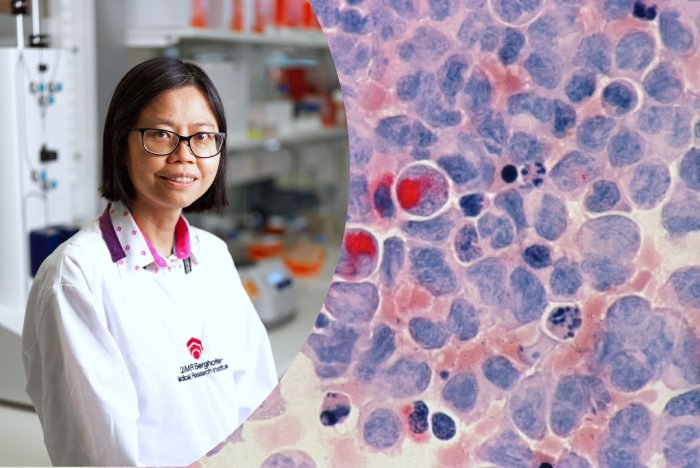 For decades, a bone marrow transplant has been the best — and often last — hope for people whose leukaemia or lymphoma had outrun chemotherapy. A bone marrow transplant is essentially a type of blood stem cell transplant.
Stem cells may now have a new role in fighting cancer by pairing up with CAR T cell technology to make treatment more affordable and more rapidly and readily available.
CAR T-cell therapy uses gene engineering to turn a patient’s own immune cells into cancer hunters. Doctors collect T-cells, the immune system’s foot soldiers, from a patient’s blood and re-engineer them to carry a chimeric antigen receptor, or CAR: a homing device that recognises a specific flag on a cancer cell.
The modified cells are multiplied into the millions in a laboratory and infused back as a once-off “living drug” that hunts down the cancer conventional treatment missed.
The results in some blood cancers have been striking and lifesaving, with a 40-50% success rate for certain types of blood cancer.
The most widely used version targets a flag called CD19, found on B cells behind many leukaemias and lymphomas. It clears the cancer along with healthy B cells, a side effect patients can live with.
Solid tumours are far harder to deal with. Their target isn’t uniform, and the cancer cells sit in what Associate Professor Siok Tey of QIMR Berghofer calls “bad soil”, a hostile environment where the therapy can’t grow.
CAR T-cell therapy and bone marrow transplantation are close cousins. Both are cellular immunotherapies for blood cancers, and the subjects of Siok’s ongoing research. In 2021, she won a Metcalf Prize from the Foundation in recognition of her achievements and to help advance her work.
Still life with stem cells: artist Patricia Piccinini explores research advances
Art at the frontiers of stem cell technology
Science Gallery Melbourne’s latest exhibition EMERGENCE(Y) has opened, with a major collaboration between stem cell researchers and a leading Australian contemporary artist.
Patricia Piccinini’s work explores the frontiers of science and technology through sculptures, photographs, video and installation. She is marking the 25th anniversary of her iconic work Still Life with Stem Cells (2002) – a hyperrealist silicone sculpture depicting a girl playing with amorphous blob-like creatures – with a year-long residency with Science Gallery Melbourne that has included time immersed in stem cell research laboratories at the Murdoch Children’s Research Institute.
Patricia’s new artwork Células Madre revisits the girl as an adult, now cradling her own baby and living alongside a more complex blob-creature inspired by the last 20 years of advancing stem cell science. “Células Madre” is the Spanish term for stem cell, literally meaning “mother cell”.
This new work was commissioned for the EMERGENCE[Y] exhibition with the support of the Melbourne node of the Novo Nordisk Foundation Center for Stem Cell Medicine, reNEW, based at the Murdoch Children’s Research Institute.
The exhibtion is on display at Science Gallery Melbourne, at the University of Melbourne’s Parkville campus. Science Gallery aims to bring art and science together to engage 15 to 25 year old people with science and technology. reNEW has also supported an interactive video work An Internal Other by Cecilie Waagner Falkenstrøm that asks if organoids are the future of human health.

EMERGENCE(Y) runs from 6 June to 5 December. Visit: melbourne.sciencegallery.com/emergence-y.
The Gallery and reNEW are running special events on Saturday 15 August as part of National Science Week:
Do you know the next top stem cell researcher?

Applications for $60,000 prizes now open
Two up-and-coming leaders in stem cell science will receive $60,000 each to boost their career to the next level. If you know a promising stem cell researcher, encourage them to apply.
The 2026 Metcalf Prizes for Stem Cell Research are open to mid-career researchers working in stem cell research in Australia. They could be working in medicine or agriculture, government or academia, as long as they have a primary focus on stem cells.
Applications are open to those who completed their PhD or research-based MD between five and 10 years ago (from August 2016 to August 2021). Allowances will be made for career breaks, such as maternity leave.
The winners will be chosen for their scientific excellence, proven leadership ability, and the potential to have a continuing influence on stem cell research in Australia. Past Metcalf Prize winners include scientists conducting fundamental research in cell biology, cell reprogramming, and genetics; or working on leukaemia and other cancers, heart failure, osteoarthritis, multiple sclerosis, inherited eye diseases, and many other causes of human suffering.
Last year we awarded prizes to:
- Dr Maria Di Biase from the University of Melbourne who has created a ‘brain bank’ of schizophrenia: blobs of brain cells from 100 patients, growing in the lab. She’s using these brain organoids to develop urgently needed new approaches to diagnosis and treatment.
- Dr Lachlan Harris from QIMR Berghofer who discovered the molecular mechanisms that control how healthy brain stem cells fall asleep and how they decide when to wake up. Waking up brain stem cells at the right time could one day improve cognition and fight neurodegenerative diseases and cancer.
You can read more about earlier Metcalf Prize winners and the research they were awarded for on our website.
The Metcalf Prizes for Stem Cell Research recognise and honour the exceptional contribution made to stem cell research by the late Professor Donald Metcalf. Over his 50-year career, Don helped transform cancer treatment and transplantation medicine and paved the way for stem cell therapy for many other conditions.
The Metcalf Prizes form part of the Foundation’s mission to support researchers whose work improves our understanding of the human body and the diseases that affect it and leads to proven stem cell therapies.
Applications close Monday 3 August 2026. We encourage last year’s unsuccessful applicants to apply again this year if they are still eligible.
To apply online, and for a full list of criteria and conditions, head to the Foundation’s website: www.stemcellfoundation.net.au/metcalf_prizes.
If you have any questions about eligibility or the application process, please contact Tanya Ha at Science in Public, who administers the awards for the Foundation: [email protected]
Miss out on an Investigator Grant?
New funding program to confront research funding crisis
The Foundation is partnering with the Australasian Society for Stem Cell Research (ASSCR) to provide targeted bridging support for stem cell researchers whose National Health and Medical Research Council (NHMRC) Investigator Grant applications were highly ranked but not funded.
Applications close 10am AEST on the 26 June 2026. Apply via the ASSCR website.
The NSCFA Near‑Miss Funding Program is a pilot initiative to fill critical funding gaps and preserve research momentum in stem cell research.
With success rates for major national schemes at historic lows, increasing numbers of high‑quality research projects narrowly miss out on NHMRC funding each year. For many laboratories, these “near‑misses” result in lost staff, stalled experiments, and, in some cases, the permanent closure of promising research programs. This new program directly targets that vulnerable gap.
Commencing with the 2026 NHMRC Investigator Grant round, the program will provide up to two grants of $100,000 to support eligible stem cell research applications that were competitive but not funded. The funding will provide 12‑month bridging support, enabling researchers to maintain critical staff, complete key experiments, and strengthen their programs for resubmission to major funding bodies.

WATCH: Experts discuss eye health, treatments for vision loss, and more
Could stem cells help prevent vision loss or even restore eyesight?
More than 453,000 Australians are blind or vision impaired, affecting their ability to read, work, drive, take part in hobbies and other activities. Prescription glasses and contact lenses help many people but some eye injuries and diseases are currently beyond repair or cure.
The good news is that Australian researchers are using stem cells to study and potentially treat causes of blindness and low vision including inherited eye diseases such as retinitis pigmentosa, Stargardt disease and Usher syndrome and acquired conditions, such as corneal damage.
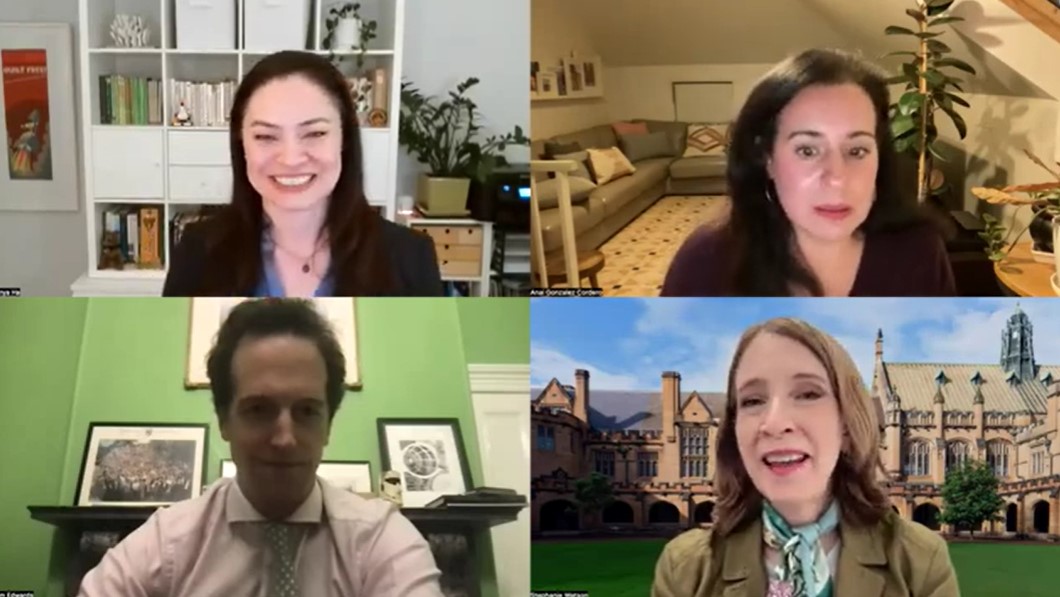
Three of Australia’s top eye surgeons and scientists explored these topics in the public forum Future Medicine: Can stem cells save sight?
You can watch a recording of the event on the Foundation website.
Featuring panellists:
- clinical trials for gene therapies for age-related macular degeneration and inherited eye diseases such as retinitis pigmentosa: clinician-scientist and vitreoretinal surgeon Dr Tom Edwards, Centre for Eye Research Australia
- finding ways to repair or replace light-sensing cells in the eye damaged by the genetic conditions Stargardt disease and Usher syndrome: cell biologist Associate Professor Anai Gonzalez-Cordero, Children’s Medical Research Institute
- stem cell treatments for corneal damage and limbal stem cell deficiency: ophthalmic surgeon Professor Stephanie Watson OAM, University of Sydney, Sydney Eye Hospital, Sydney Children's Hospital, and Prince of Wales Hospital.
Stem cell news from around the world
Between newsletters, we share stem cell news on social media:
Here are a few stories we’ve shared recently:
National Stem Cell Foundation of Australia: Scientists working on diabetes, genetics of reprogramming recognised in Kings Birthday Honours.
The Age: The sculptor who brought us the blob-like babies is back – and the blobs have evolved.
NASA: making stem cells in space.
The Australian: How science turned back the clock of human development to create a miracle blood stem cell.
People: Man 'likely cured' of HIV after stem cell donation from brother who has rare blood mutation. Paper.
Sydney Morning Herald: Why Artemis II astronauts are carrying their own stem cells for lunar flyby.
Stat News: 6 key dilemmas as human embryo models get ever closer to the real thing.
News Medical Life Sciences: Chronic colitis reshapes colon stem cells in ways that can accelerate tumour growth. Paper.
Have you been forwarded this by a colleague? Sign up for the newsletter here.
Showing 1 reaction